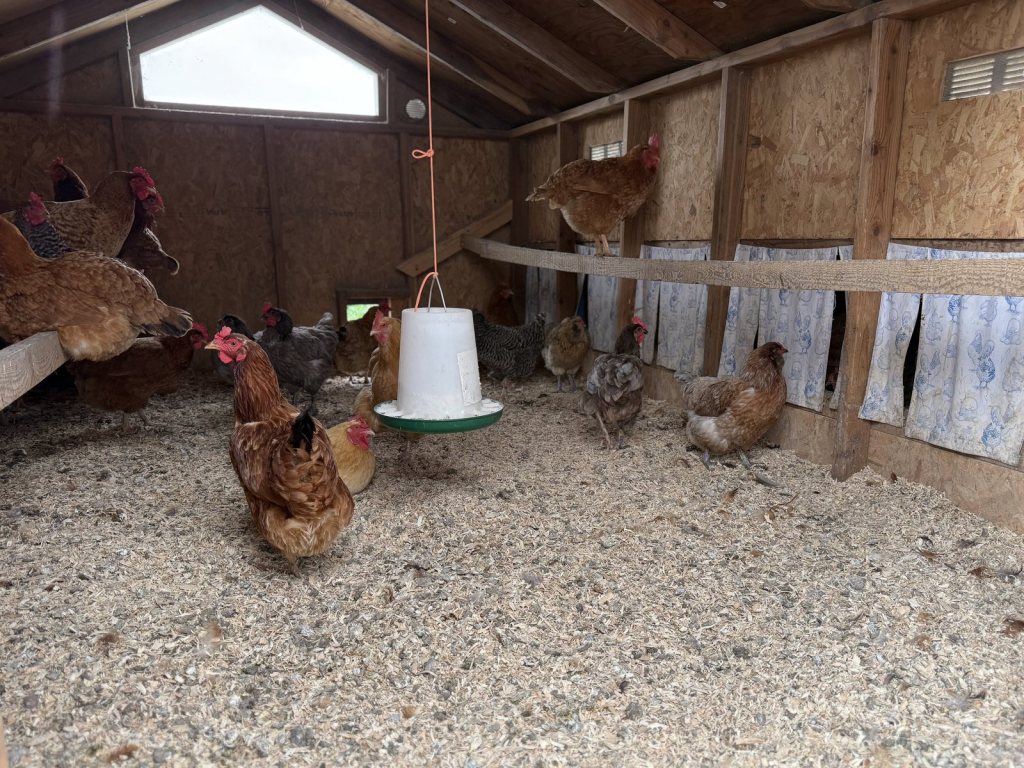
A small flock can be one of the most rewarding groups of animals to keep. Chickens are curious, social, and far more individual than most people expect. Getting started well comes down to a few decisions made before the first chicks arrive.
Check the local rules first
Cities, counties, and homeowners associations around north Atlanta set their own limits on backyard poultry, including how many birds you may keep, where a coop may sit, and whether roosters are allowed. Check with your city or county and your HOA before you build or buy.
Build for predators and Georgia heat
- Hawks, raccoons, foxes, snakes, and neighborhood dogs all take an interest in chickens. Use hardware cloth rather than chicken wire, which keeps birds in but does not keep predators out, and close the coop securely every night.
- Summer heat is a bigger risk here than winter cold. Ventilation high in the coop, shade over the run, and constant access to clean water matter more than insulation.
- A common guideline is about 4 square feet per bird inside the coop and about 10 square feet per bird in the run. More room usually means calmer birds and fewer squabbles.
Protect the flock’s health
Keep the shoes and tools you use with your flock separate when you can, limit visits from other poultry keepers, and keep new birds apart for a few weeks before adding them. The USDA’s Defend the Flock program has practical biosecurity guidance, and UGA Extension is a good local source. Health concerns belong with an avian or poultry veterinarian.
Get to know your birds
Spend a few minutes with your flock each day. You will start to notice which hen approaches readily, which hangs back, and what each one does in a familiar routine. That familiarity makes handling easier and helps you notice early when a bird is not acting like itself.
If you would like help planning a coop, settling new birds, or getting to know your flock, the backyard chicken and flock coaching visit covers each of these.

