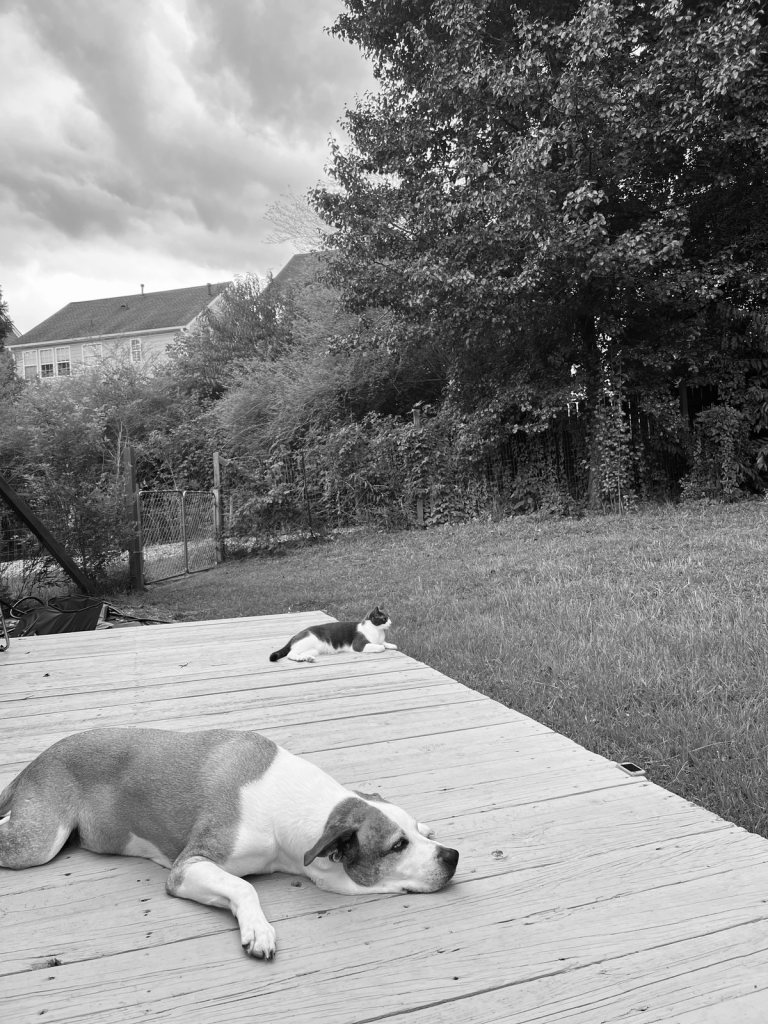
Dogs build their sense of safety around routine and around the familiar way their person moves, speaks, and responds. When a parent begins living with dementia, those signals can change gradually or from one day to the next. A dog may follow its person more closely, pace in the evening, bark at ordinary sounds, or seem unsure whether a request is meant for it. Families often read this as misbehavior. More often, the dog is trying to make sense of a person who is no longer quite as predictable.
Keep the day predictable
- Feed, walk, and settle the dog at the same times each day, even if a family member or caregiver handles part of the routine.
- Choose a few cues and use the same word and the same hand signal every time. A visual signal often holds up better than a spoken one on harder days.
- Give the dog a bed near your parent’s usual chair, so it can stay close without being underfoot.
Share the care without taking the dog away
If your parent can no longer manage feeding or walks safely, look for a role they can still enjoy, such as offering a treat for a sit, brushing, or simply sitting together. The relationship matters as much as the chores. A short written routine posted in the kitchen helps everyone who pitches in do things the same way, which the dog will appreciate as much as your parent.
Watch for safety concerns
Falls, missed or doubled meals, and doors or gates left open are the problems families mention most. Keep water bowls out of walking paths, use a simple feeding log on the refrigerator, and choose short, level, familiar walking routes.
When to ask for help
If the dog’s behavior changes suddenly, talk with its veterinarian first, because pain and illness can look like behavior problems. If the household needs a plan that fits both your parent and the dog, an in-home consult can help, and family members are welcome to arrange it.

